



Guides · 11 min read
Room Ideas · 12 min read
Wabi-Sabi and Japandi Lighting Ideas: Warm, Natural Light Room by Room
Quick answer
- Keep it warm: choose warm white bulbs, about 2700–3000K, everywhere you relax.
- Diffuse every source: light should pass through a shade of rattan, fabric, resin or stone. Avoid bare bulbs and glossy glare.
- Bring the light down: use table, floor and wall lamps at or below eye level, and treat overhead light as one layer, not the only one.
- Use natural, imperfect materials: travertine, rattan, wood and textured or hand-knitted shades fit both styles.
- Aim for cohesion, not matching sets: repeat one or two materials or tones from room to room instead of buying identical lamps.
In this guide7 sections
Some rooms just feel calm the moment you walk in. Often it isn't the furniture doing that. It's the light: low, warm, a little soft at the edges, coming through stone, woven cane or fabric instead of glaring from a bare bulb. That's the heart of wabi-sabi and Japandi lighting, and it's easier to get right than most style guides make it sound. Here's what the look really comes down to, and how to plan it room by room.
The heights and sizes below are common designer rules of thumb, not building codes. Use them as a starting point and adjust for your ceiling, your furniture and how you actually use the room.
What is wabi-sabi lighting? And Japandi?
Wabi-sabi is a Japanese way of seeing beauty in things that are simple, natural and a little imperfect: pitted stone, uneven weaves, wood that shows its grain. Wabi-sabi lighting follows that idea. Fixtures look made from real materials, the light is gentle and warm, and nothing feels flashy or brand new.
Japandi blends Japanese minimalism with Scandinavian comfort. It keeps the calm, natural palette of wabi-sabi but adds a bit more of the clean, practical Nordic side: simple shapes, light woods, soft textiles and a strong sense of coziness.
How both differ from Scandinavian or Nordic lighting
Classic Scandinavian lighting is about brightening long, dark winters with clean, often white or pale-wood fixtures, and it is happy to use smooth glass, metal and graphic shapes. Wabi-sabi leans darker and earthier, with more texture and visible imperfection. Japandi sits between the two: Nordic simplicity with Japanese restraint and natural materials. In practice, many pieces work in all three. If you love the cleaner Nordic side, browse our Scandinavian and Nordic collections; for the earthier wabi-sabi side, start with the travertine collection.
5 principles of wabi-sabi and Japandi lighting
1. Warm light, about 2700–3000K
Color temperature does more for this look than any single fixture. Warm white around 2700–3000K makes stone, wood and linen look rich and soft, while cool white (4000K and up) tends to make natural materials look flat and gray. Many of the lamps in this guide are offered in warm, neutral or cool white, so pick warm for living rooms, dining rooms and bedrooms. If you can, choose bulbs with a high color rendering index (CRI 90 or above) so natural materials look true.
2. Diffused, not bare
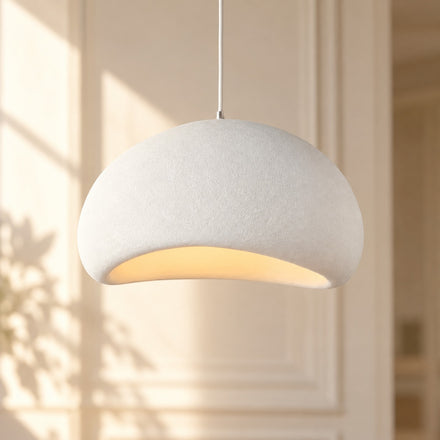
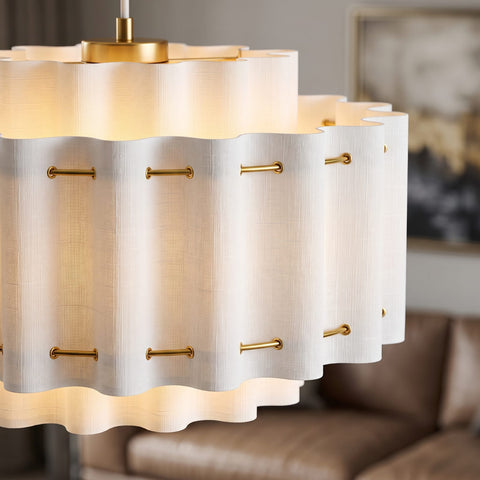
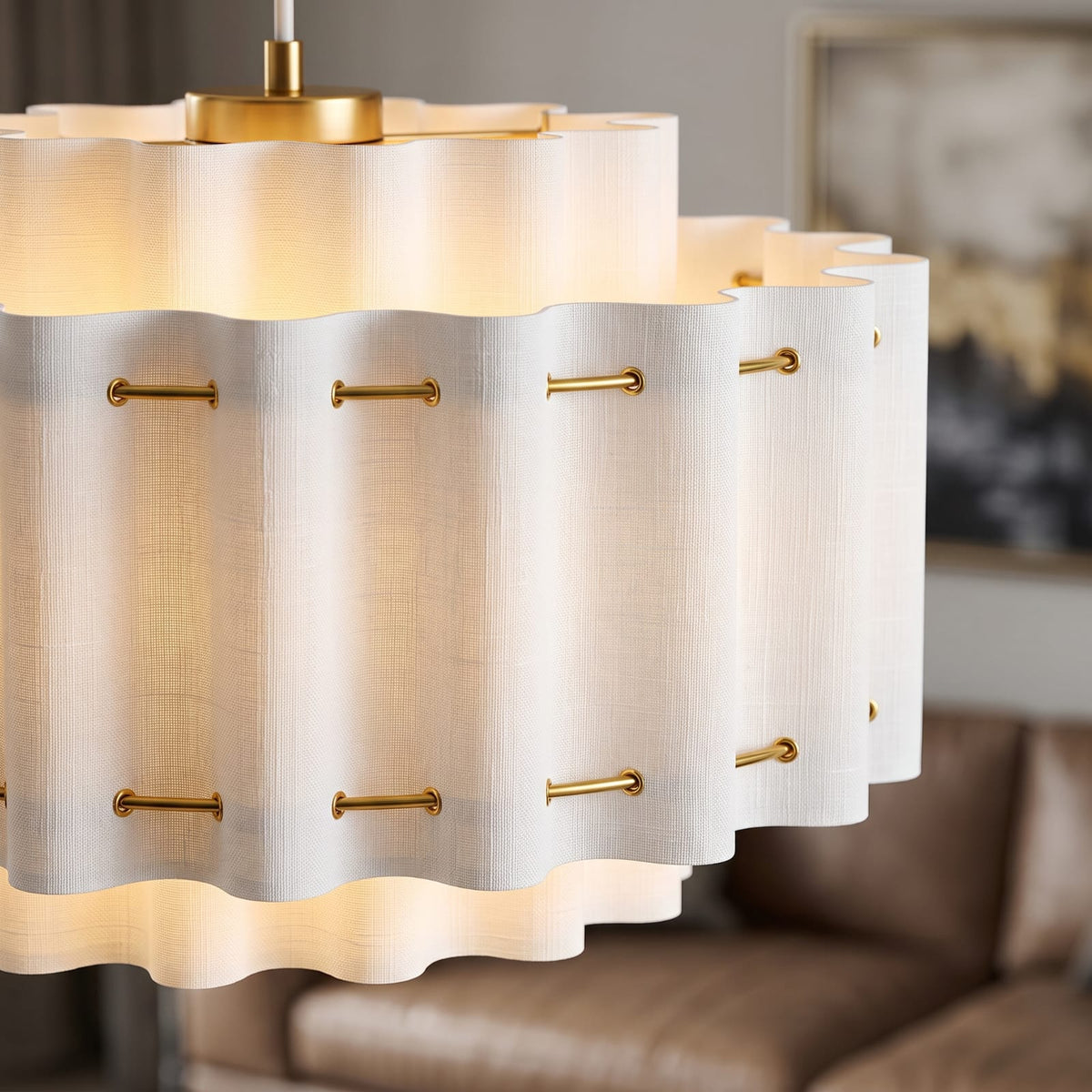
Both styles avoid harsh, direct light. You want the bulb hidden and the glow filtered through something: an open rattan weave, a fabric shade, a textured resin shell or a stone ring. The French Wabi-Sabi Light is a good example. Its hand-knitted white fabric shade is shaped into soft waves, so the room sees a warm glow rather than the bulb itself.
3. Eye level and lower
Japanese interiors traditionally sit low, and the lighting follows. Instead of relying on one bright ceiling fixture, add pools of light at different heights: a small lamp on a console, a floor lamp beside a chair, a wall light in a hallway. It's the easiest way to make a room feel quieter in the evening. Overhead light is still useful, just put it on a dimmer and treat it as one layer.
4. Natural, imperfect materials
Look for materials that show their origin: travertine with its natural pits and veining, rattan with its uneven weave, wood with visible grain, fabric or paper-like shades that glow from within. Mixing two or three of these in one room works better than relying on a single material everywhere.
5. Cohesion over matching sets
Your lamps don't need to match. A rattan pendant over the dining table, a stone lamp on the sideboard and a fabric pendant in the bedroom can all live in one home, as long as they share a warm palette and a natural feel. Repeat one element, such as a stone tone, a wood color or a woven texture, so the rooms connect.
Wabi-sabi and Japandi lighting room by room
Living room
Start with low light and build up. A small stone lamp on a console or shelf adds a warm spot of texture: the Modern Travertine Table Lamp is a compact 8 in (20 cm) tall plug-in lamp with a natural stone body and warm white light. At that size it's an accent lamp, not a reading lamp, so pair it with a floor lamp beside your favorite chair. The Nordic Imitation Bamboo Wabi Sabi Floor Light pairs canvas shades with imitation-bamboo detailing and comes as a 63 in (160 cm) floor lamp or a 21 in (54 cm) table lamp.
If you want a pendant, hang it over the coffee table or in a corner, not in your line of sight to the TV. A soft fabric shade like the French Wabi-Sabi Light, about 19.7 in (50 cm) wide on an adjustable 59 in (150 cm) cord, gives the room a gentle centerpiece without glare.
Dining room
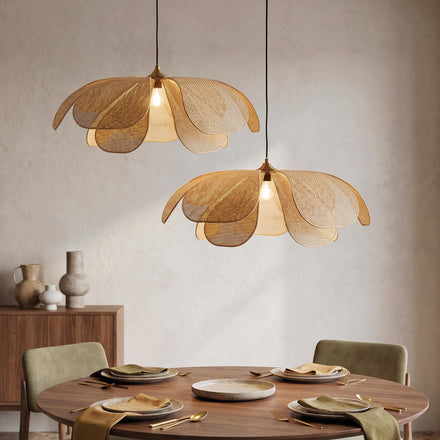
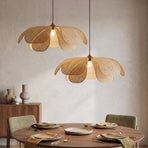
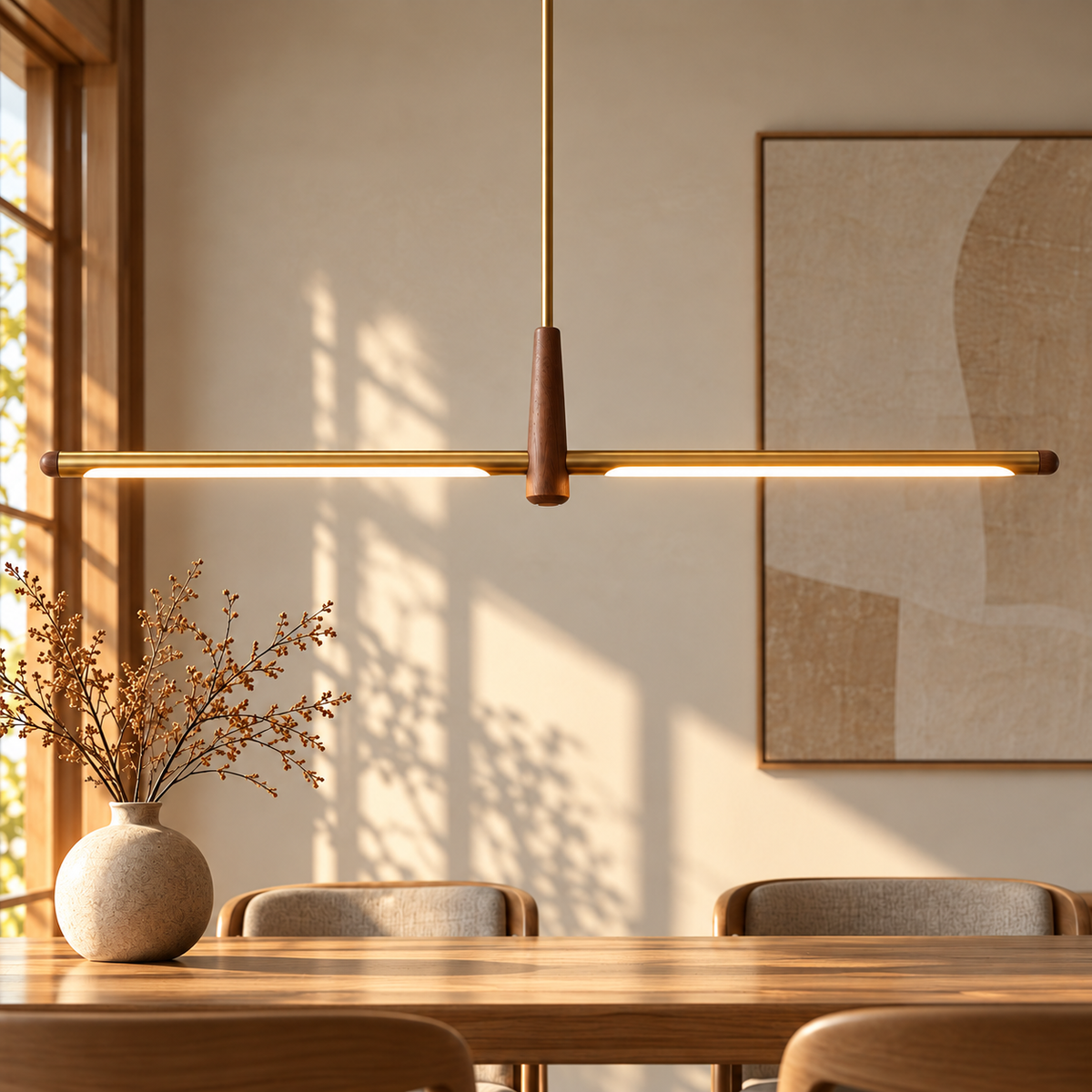
The dining table is the one place where a single statement fixture makes sense. Woven and wooden pendants are natural fits. The Wabi-Sabi Style Rattan Pendant Lamp layers hand-woven rattan petals around a soft inner shade and comes in 16, 20 and 24 in (40, 50 and 60 cm) sizes in Neutral Wood or Coffee. For a lower, wider shape, the Vintage Wabi Sabi Wood Art Pendent Light floats two curved wood blades around a single bulb and comes 17, 24 or 34 in (43, 60 or 85 cm) wide.
For size and height, the same rules of thumb apply as for any dining fixture: hang the bottom about 30–36 in (76–91 cm) above the table with an 8 ft (2.4 m) ceiling, and choose a width of roughly ½ to ⅔ of the table's width. Our dining room chandelier size guide has the full tables in inches and cm.
Bedroom
The bedroom is where wabi-sabi lighting pays off most. Keep the overhead light soft, and do most of the work beside the bed. Hanging pendants or wall lights by the bed frees up the nightstand and feels calm and deliberate. A common rule of thumb is to hang a bedside pendant so its bottom sits roughly at eye level when you're sitting up in bed, a little above the nightstand top, and slightly forward of the headboard.
The Wabi Sabi Travertine Pendant Light is small enough for this: the stone pendant comes in 4 or 6 in (10 or 15 cm) diameters, with matching wall versions if you'd rather keep the ceiling clear. The Travertine Wall Lamp is a slim 7.1 in (18 cm) disc in beige or brown that rotates 180°, so you can angle the glow.
Entry and stairs
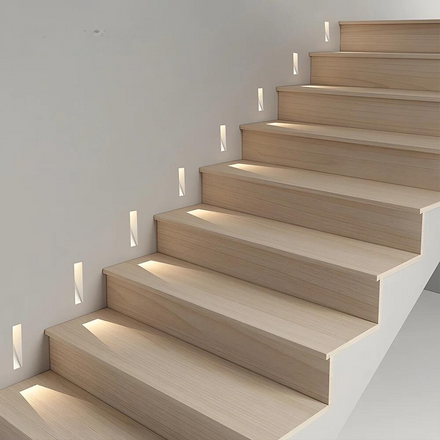
Entries and staircases need light you can walk under safely, so clearance comes first. As a rule of thumb, keep the bottom of any fixture at least 7 ft (213 cm) above the floor where people walk. Wall lights are often the simplest wabi-sabi solution here: hallway sconces are commonly mounted around 60–66 in (152–168 cm) from the floor. The Japanese Retro Foyer Cement Wabi-Sabi LED Wall Lamp has a cement body that throws light both up and down, and at 7.9 in (20 cm) tall it fits narrow halls and stair walls.
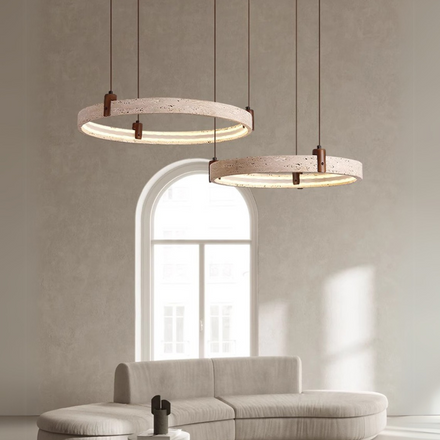
In a taller foyer or stairwell, a stone chandelier can be the focal point. The Elegant Travertine Chandelier comes as a single ring or in two- and three-ring versions, which suit the vertical space above a staircase.
Travertine lighting: what to know
Travertine is a natural stone, and that's the whole appeal: every piece has its own color variation, veining and small pits. A few things worth knowing before you buy:
- No two pieces are identical. Natural pitting and color shifts are part of the material, not a defect. Expect yours to differ slightly from the photos.
- Stone is heavier than most shade materials. For a stone pendant or chandelier, make sure the ceiling box and mounting are suitable, and have a qualified electrician install hardwired fixtures.
- Clean it gently. Travertine is a form of limestone, so acidic cleaners like vinegar or lemon can dull or etch the surface. Dust with a soft, dry cloth, or use a slightly damp one for marks.
- It pairs naturally with oak and walnut, linen, rattan and plaster walls, so it's an easy way into the look.
The Travertine Stone Ring Chandelier is a good example of how stone and light work together. It's made from natural travertine, comes in 15.7, 19.7 and 23.6 in (40, 50 and 60 cm) diameters on an adjustable 59 in (150 cm) hanging length, and is available in warm, neutral or cool white or a dimmable version with a remote. See the whole travertine collection for lamps, pendants, wall lights and chandeliers.
Common wabi-sabi and Japandi lighting mistakes
- Cool bulbs. A beautiful stone or rattan fixture with a 5000K bulb looks clinical. Choose warm white for living spaces.
- One bright ceiling light and nothing else. It flattens texture. Add at least one lamp at eye level or lower in every room you relax in.
- Low pendants in front of the TV. A pendant hanging into your sightline to the screen is distracting. Keep living room pendants over the coffee table or in a corner, or use floor lamps instead.
- Visible cords everywhere. Messy cords break the calm. Route lamp cords behind furniture, and use a ceiling hook or cord cover for pendants placed away from the junction box.
- Buying everything as a set. Matching every lamp can feel showroom-like. Mix materials and keep a common warm palette.
- Bare bulbs in open fixtures. If you can see the filament or LED chip from where you sit, the light will feel harsh. Raise or lower the fixture, or choose a more enclosed shade.
Before you order
- Measure the drop: check the listed cord length against your ceiling height and the height you want, for example 30–36 in (76–91 cm) above a dining table.
- Pick the light color: choose warm white where the option exists.
- Check dimming: pendants with E26/E27 sockets, such as the rattan and wood pendants above, can be dimmed with a dimmer switch and a dimmable bulb. For integrated LEDs, check which dimming option the listing offers.
- Voltage and installation: the fixtures in this guide list 110-260V, which covers standard household power in North America and Europe. For hardwired fixtures, we recommend a qualified electrician.
Rufat Lights offers free worldwide shipping with customs and duties covered, and you can request a return within 60 days of receiving an eligible item (custom orders can't be returned). Start with the travertine collection, or explore our Nordic and Scandinavian collections for the lighter side of Japandi.
Frequently asked questions
What lighting fits a Japandi or wabi-sabi room?
Warm, diffused light from fixtures made of natural materials: rattan, wood, stone such as travertine, and fabric or paper-like shades. Combine a soft overhead fixture with table, floor and wall lamps at or below eye level, and keep everything on warm white bulbs.
What color temperature is best for Japandi lighting?
Warm white, roughly 2700–3000K, works best in living rooms, dining rooms and bedrooms. It brings out wood, stone and linen. Save neutral or cooler light for task areas such as kitchen counters or a work desk.
Do Japandi lamps need to match?
No. Japandi is about cohesion, not matching sets. Repeat one or two materials or tones, like a travertine finish or a natural wood color, and let the shapes vary from room to room.
Should a pendant hang in front of the TV?
It's best not to. A pendant in your sightline to the screen is distracting and can cause glare. Center a living room pendant over the coffee table or in a corner, or use floor and wall lamps at eye level instead.
Is a travertine lamp worth it?
If you love natural texture, yes. Travertine gives a warm, earthy look that pairs easily with wood and linen, and each piece is slightly different. Expect it to be heavier than a fabric or rattan lamp, and clean it with a soft cloth, not acidic cleaners.
How do I clean a travertine lamp?
Dust it with a soft, dry cloth, or wipe it with a slightly damp cloth for marks. Avoid vinegar, lemon and other acidic or abrasive cleaners, which can dull or etch the stone. Always switch off and unplug the lamp first.
What materials work for wabi-sabi lighting?
Travertine and other natural stone, rattan, wood, cement, textured resin and fabric or paper-like shades all suit the style. The key is a natural, slightly imperfect surface and a shade that softens the light.
What is the difference between Japandi and Scandinavian lighting?
Scandinavian lighting tends to be lighter and cleaner, with pale woods, white shades and smooth glass or metal. Japandi keeps that simplicity but adds Japanese restraint and earthier, more textured materials such as stone, rattan and darker woods.
Shop this story
Shop all French Wabi-Sabi Light$289.95
 Modern Travertine Table Lamp$249.95
 Nordic Imitation Bamboo Wabi Sabi Floor LightFrom $459.95
 Wabi-Sabi Style Rattan Pendant LampFrom $169.95
 Vintage Wabi Sabi Wood Art Pendent LightFrom $429.95
 Wabi Sabi Travertine Pendant LightFrom $99.95
 Travertine Wall Lamp$179.95
 Japanese Retro Foyer Cement Wabi-Sabi LED Wall Lamp$129.95
 Elegant Travertine ChandelierFrom $499.95
 Travertine Stone Ring ChandelierFrom $499.95
 Japanese Wabi Sabi Wind Handmade Rattan Pendant LightFrom $249.95
 Nature-Inspired Wabi Sabi Nest Pendant LightFrom $229.95
More from The Journal
All stories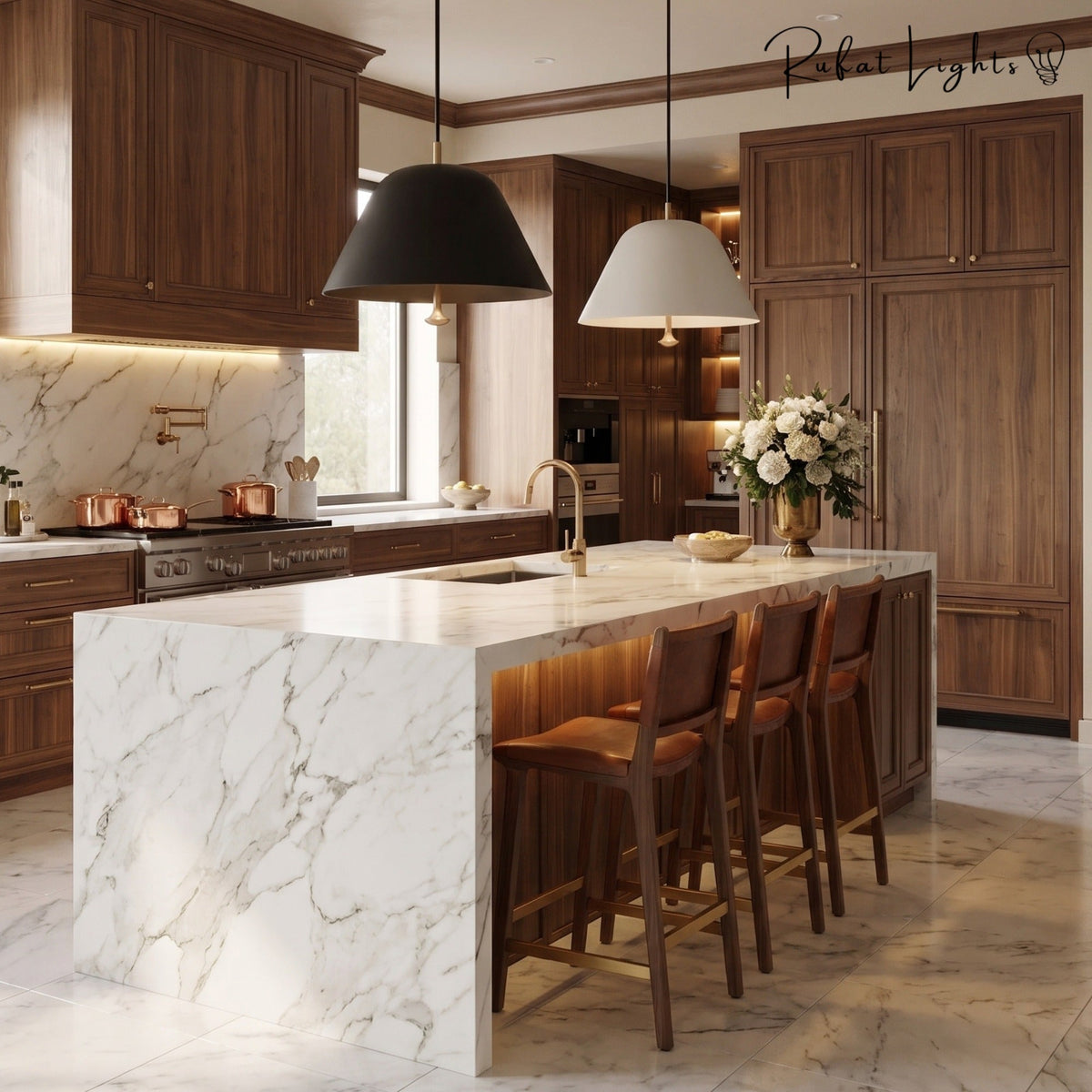
Guides · 13 min read
Kitchen Island Pendant Lighting: How Many, How High and How Far Apart
Product Stories · 6 min read
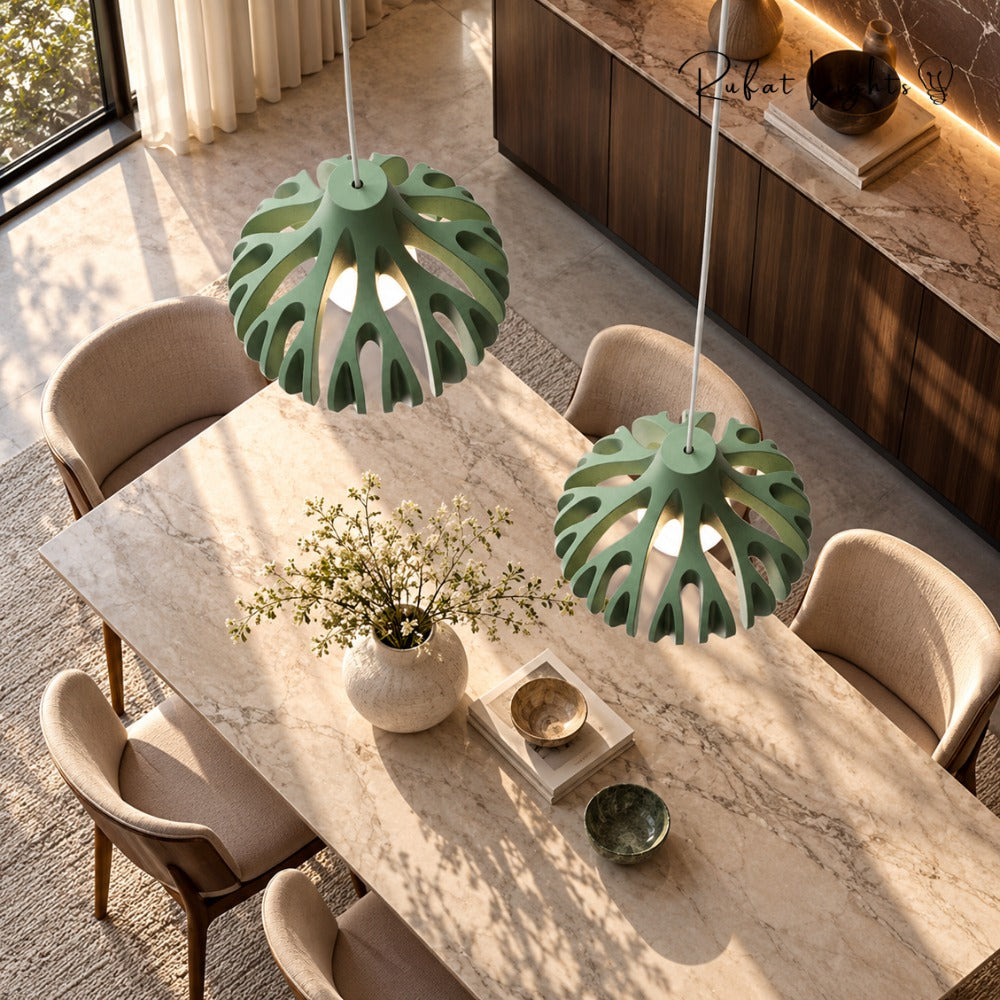
Trendy Macaron Resin Pendant Lamps at Rufat Lights
Need help choosing?
Talk to our lighting team
Send us your room or table size and ceiling height. We will reply with the right size and hanging height, usually within one business day.
New guides, first
One email when a new guide or collection lands. Early access to sales.
Free worldwide shipping · 60-day returns · 13,899+ customers